loading
HireEliteDigitalExpertsInstantly
loading
Web Platforms
Content management systems remain practical in 2026. See when a CMS makes sense, when to scale past an MVP, and how to hire the right developer for either.
Strategic Insights Group
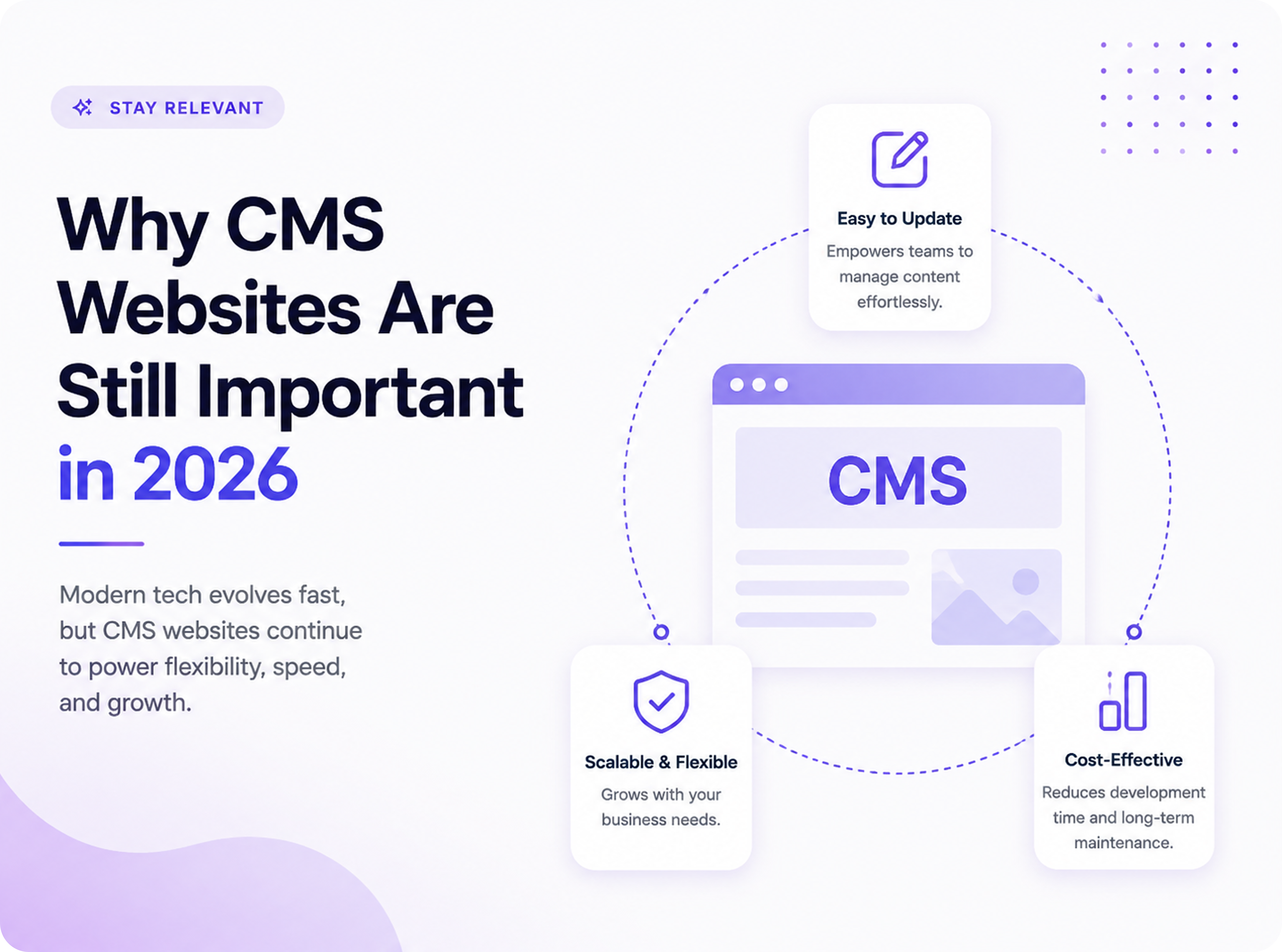
Modern web development includes powerful frontend frameworks, cloud platforms, and AI-assisted tools — but content management systems remain useful because they let teams create, manage, and publish content without needing a developer for every small update.
A Content Management System helps users create, organize, edit, and publish digital content — blog posts, pages, images, products, and news updates. WordPress is a well-known example, alongside headless and specialized CMS platforms.
A CMS is a content-management approach, not a limitation on frontend technology. Modern websites can combine a CMS with a custom frontend, APIs, and cloud infrastructure when the project calls for it — which is exactly the kind of hybrid build our full-stack developers and no-code developers handle regularly.
ARTICLE SECTIONS
Lead Product Designer
Get the latest technical insights delivered weekly to your inbox.
| Signal | What It Demands |
|---|---|
| More users | Greater demand on performance, databases, and infrastructure |
| Better UX expectations | Improved navigation, responsiveness, and onboarding |
| Higher security bar | More mature authentication and data protection |
| Scale pressure | Better database design, caching, and observability |
CMS platforms remain practical for managing content in 2026, and an MVP is only the beginning of a product's evolution. Choose technology based on your content, users, and growth signals — then bring in the right developer to scale it when the evidence calls for it.
Whether you need a CMS site or a custom-built product, we'll match you with the right developer. Browse Hire Developers or talk to our team to scope your build.